Image

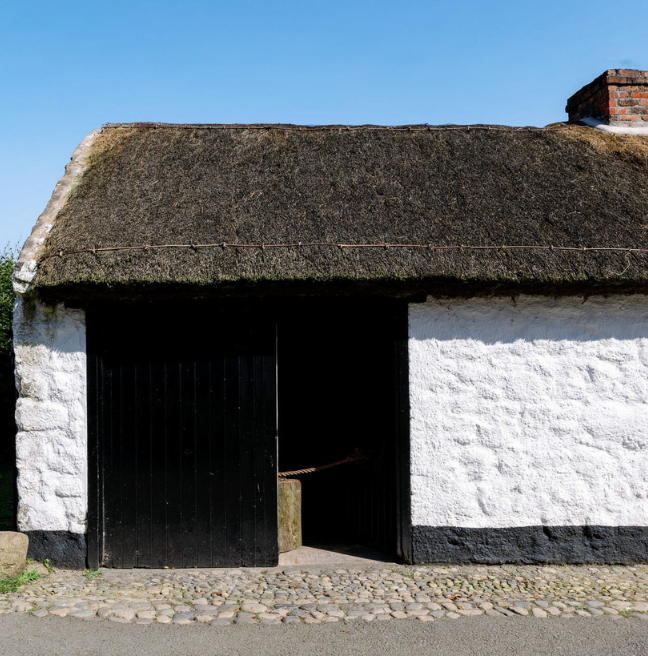
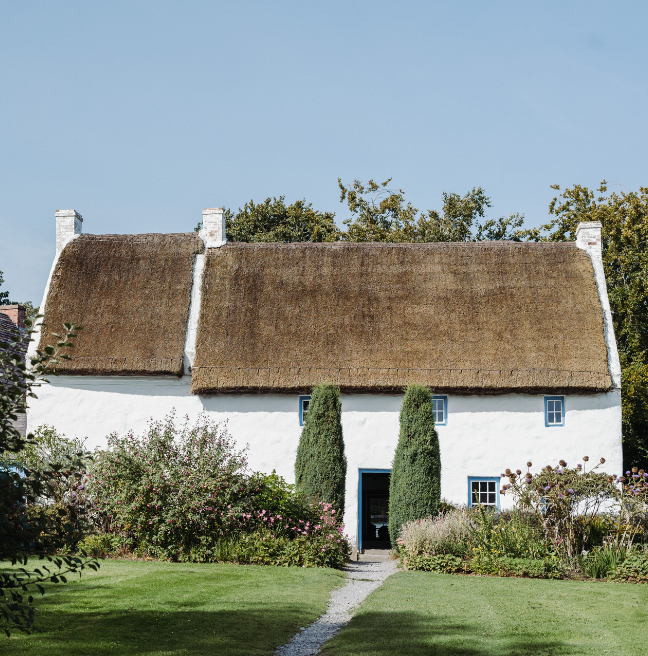
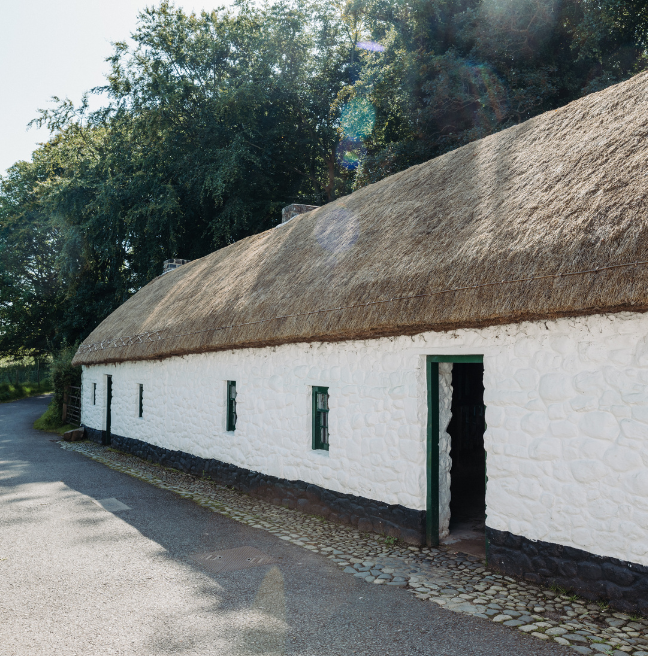
The farmhouse comes from Coshkib, Cushendall, County Antrim. It was built in the 1850s and dismantled and moved to the Folk Museum in 1965.
The Coshkib farmhouse is a typical example of a Glens of Antrim house. It was re-erected at the museum on a steeply sloping site chosen to reflect the farmhouse’s original location.

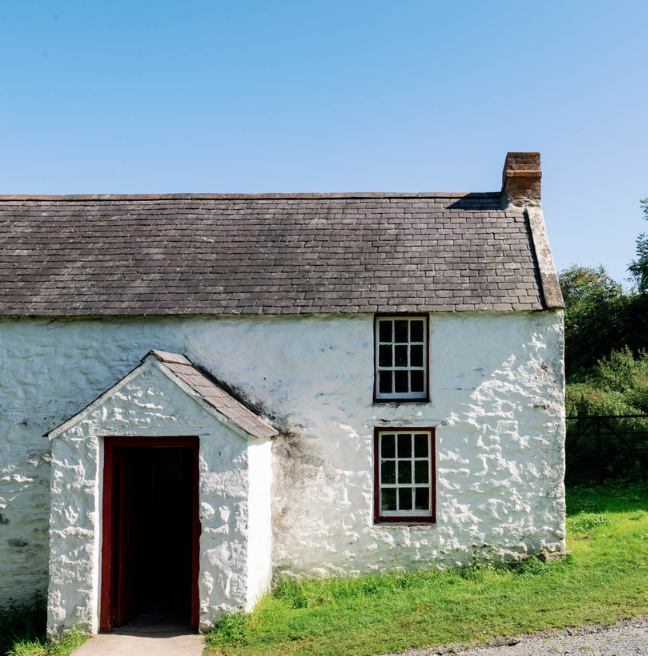
The Coshkib farmhouse is a stone built, two storey house but it probably started out as a modest two roomed, thatched farmhouse.
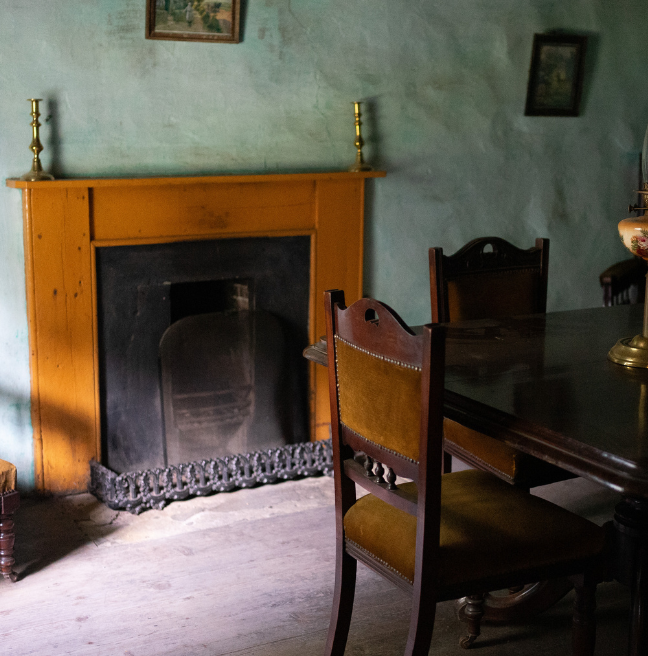
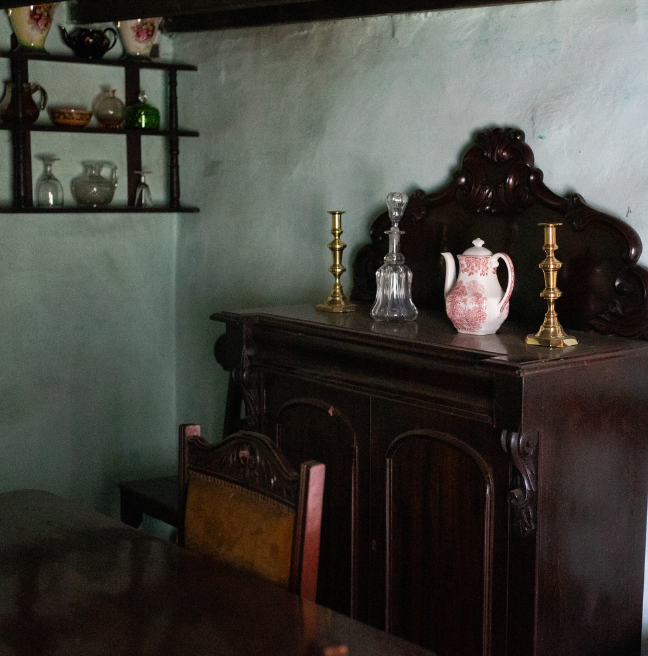
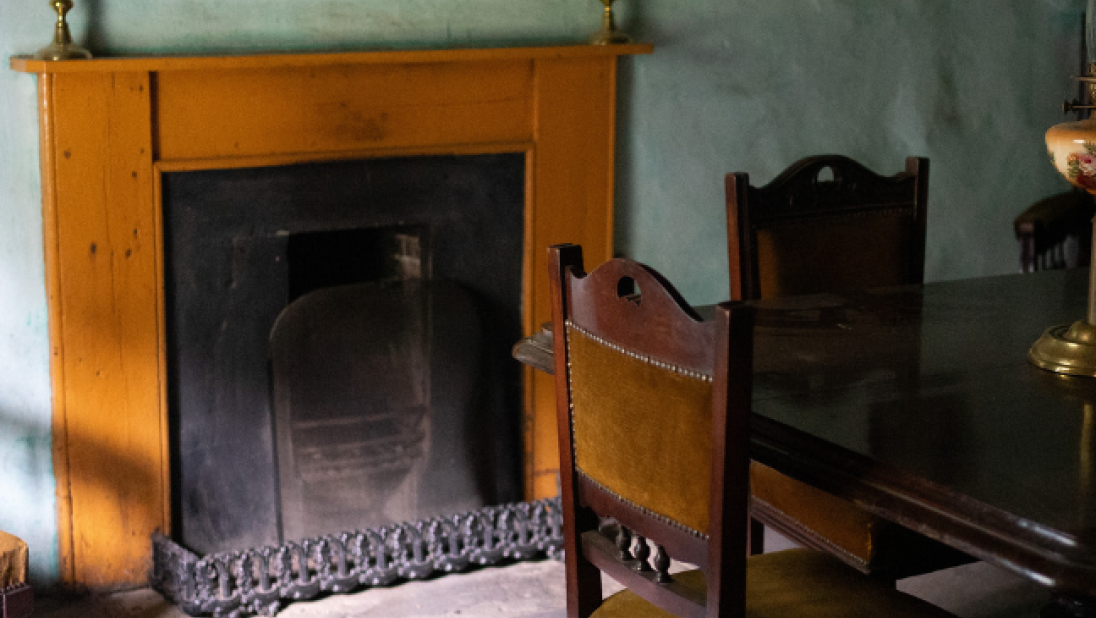
In the early 1900s a second storey with a slated roof was added to the house. These improvements allowed space for two upstairs bedrooms and a downstairs parlour or ‘good room’ beside the main living room and kitchen.
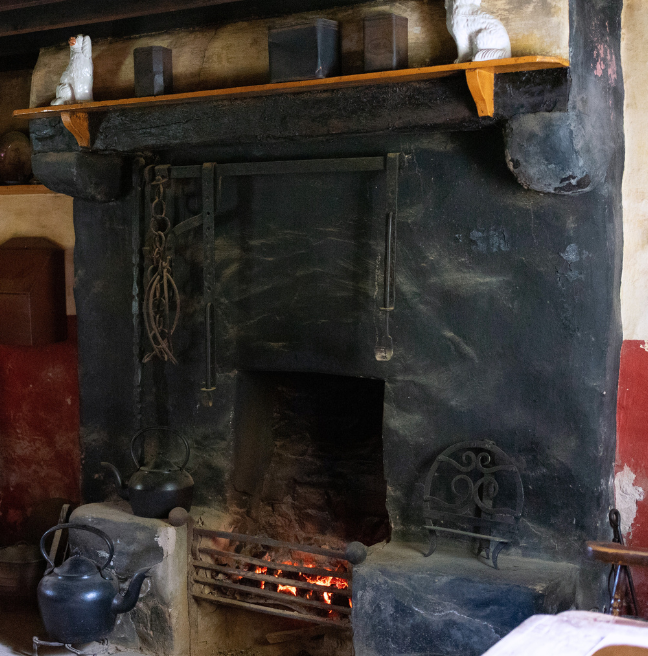
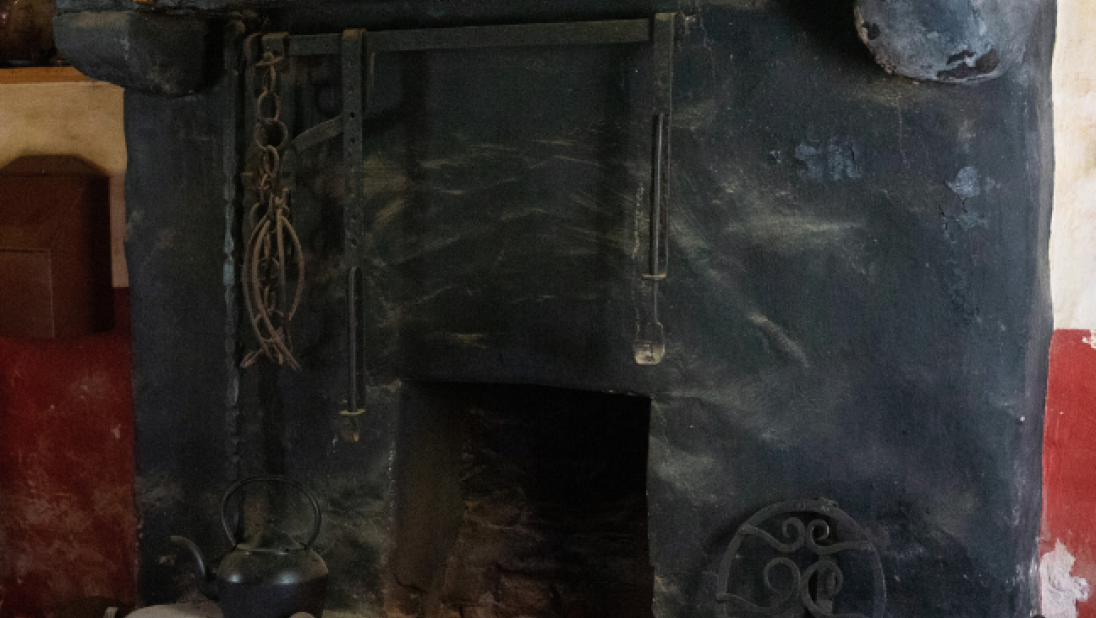
The two stone, whitewashed farmyard entrance pillars clearly mark the main way down through the farmyard and to the front (and only) door of the farmhouse. The house was heated by the open hearth in the kitchen. It was around the kitchen hearth fire that everyday household duties were performed and daily meals taken. After the day’s work, family and neighbours often gathered around the hearth to talk of local affairs and past times.
The farm was small in extent - about 35 acres. Both cattle and sheep were raised on the farm and a couple of horses were kept. Crops cultivated included oats, hay, potatoes and turnips. By the farmyard, both poultry and litters of pigs were raised.
The farm belonged to the Hyndman family. They were a local farming family who had lived in the townland of Coshkib for several generations. In the 1900s, the family consists of Dan Hyndman, his wife Margaret and their seven children (four sons and three daughters).
The last owner of the farm was Dan’s youngest son, also called Dan. He was a bachelor farmer who died in 1953 after running the farm for many years. His funeral wake was held in the house. The Ulster poet John Hewitt was in attendance, after which he wrote his poem ‘The Wake’.