"The Red Horizon." Not much liked by anyone.
"Tim and the Squire". Very pretty story.
"Terry the Girl Guide." Not much, still, pretty good.
"Patsy." Much liked by readers.
"Anne of Green Gables." Really the best book in the list.
After taking October off, the girls are back with a new edition of The Club Monthly.
November's biggest surprise is that The Club Monthly may in fact be a book club!
The below shows a reading list of books that were passed around from reader to reader. The Club was established with rules - it seems that there were fines for individuals who did not pass on their book in a timely manner.
Books read by the Club - allegedly in just one month! - include the classic Anne of Green Gables ("really the best book in the list") and The Red Horizon ("not much liked by anyone").

If 'The Club' of 'The Club Monthly' was a book club or literary society, the high number of original stories penned makes sense for a group of voracious young readers.
"The Red Horizon." Not much liked by anyone.
"Tim and the Squire". Very pretty story.
"Terry the Girl Guide." Not much, still, pretty good.
"Patsy." Much liked by readers.
"Anne of Green Gables." Really the best book in the list.
This month's stories are once again varied in their themes and writing levels. The two below touch upon both personal and societal topics: the loneliness of a rural childhood, and returning veterans from the First World War who were facing long-term injuries and disabilities.
Bessie was a rather lonely little girl, for her parents lived on a lonely farm, and there were not any little girls near for to play with.
One day, while Bessie was playing by herself in the woods, she found a poor little rabbit that had broken its leg. How its little heart did beat when Bessie picked it up! She wanted to tell it she wouldn't hurt it, but of course poor Bunny didn't understand.
Bessie took it home, and bound up its leg, and kept it till it was well, and then she took it to the woods and put it down. What do you think happened? The little rabbit would not run away, but followed her home again!
Bessie was pleased, you may be sure. She called it Fluff, and she told her Mummy she really never was lonely now, with Fluff for a friend.
Betty and John had a little Shetland pony, and they called it such a funny name, "Ginger". John gave it this name, and although Betty did not like it, the pony did, for he soon answered to it.
Ginger was a wee pony and very artful; if Betty gave him sugar he would let her lift up his hoof to shake hands, but till he had it he would plant his feet firmly on the ground. He would lift his stable latch and walk out when he thought fit, and once he amused Betty very much by coming indoors, and they had such a job to get him out!
Then one day Betty whispered to John, and John said "Yes I think we ought, and I expect Ginger would like it." And now on fine days Ginger is busy taking wounded soldiers for drives in a little chaise.
Betty and John miss their rides, but they are very glad the wounded soldiers enjoy them instead.
'The Fairy Lodge', in contrast, reads like a work of non-fiction. In it, a childhood long past is recounted, in which six siblings had a log cabin built for them in the American wilderness by their father. There is no plot, just a description of a two-roomed cabin and its decoration.
By 1920, Ireland had witnessed large waves of migration abroad, including to the United States.
Some fortunate American children - there were six of them - had a delightful log cabin built for them in the forest by their father. It was to be their very own, and, as he was a rich man, he could afford to make "Fairy Lodge" a perfect picture of a place, both inside and out. There were two rooms in the cabin, a parlour and a kitchen and in the parlour a huge fireplace, with a great chimney, filled up one side. Old fashioned tongs were there, and bellows and a queer, old kettle, while a spinning-wheel stood in one corner, and an old oak dresser was useful to hold dishes and cups and saucers. The kitchen had a stove, where those happy children cooked all sorts of nice things, and now and then some funny ones, no doubt. When "Fairy Lodge" was ready garden and all to it, the [?] got a house-warming, and dressed up to look like their own great-grandmothers, with hair powdered. These children are now grown-up, but a little girl named Mable is still enjoying the dear little house her mother had built for her. It is called "Rosebuds" and has only one room, with a cooking range in it. All the china and tablecloths had rosebuds on them. Not long Mable had a dinner party and each little girl that came cooked a meal.
This month's recipe is a rather festive one! The below is a classic recipe for peppermint creams. Short and simple, all it calls for is icing sugar, egg white, and peppermint essence.
3 heaping table spn. fulls of icing sugar. 3 drops mint essence and enough white of egg to moisten.
Rub all thoroughly together. Bake into a flat scone then cut out with a small lid. Leave to harden.
These are delicious sweets.
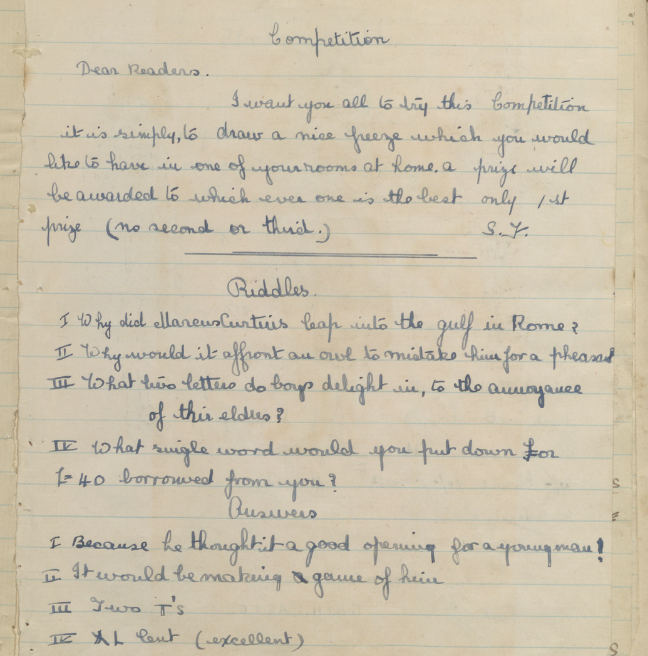
November's edition of The Club Monthly is back to its regular schedule of jokes and riddles.
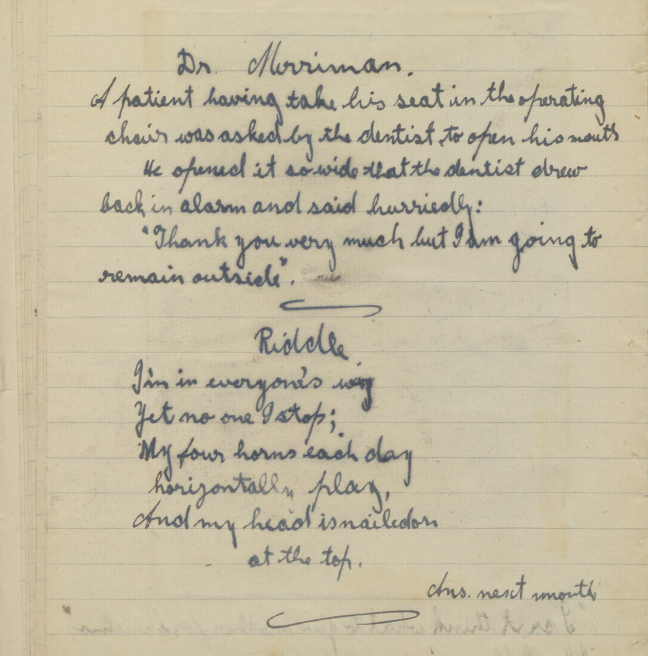
Some riddles are easier than others - one to find out the mystery musical instrument (spoiler alert: the answer is 'piano') is much more intuitive than one that asks you to think of 'what's in everyone's way' and whose 'head is nailed on at the top' (another spoiler alert: the answer is, apparently, turnstile).
Many jokes shared in The Club Monthly stand the passage of time.
A patient having taken his seat in the operating chair was asked by the dentist to open his mouth. He opened it so wide that the dentist drew back in alarm and said hurriedly:
"Thank you very much but I am going to remain outside."
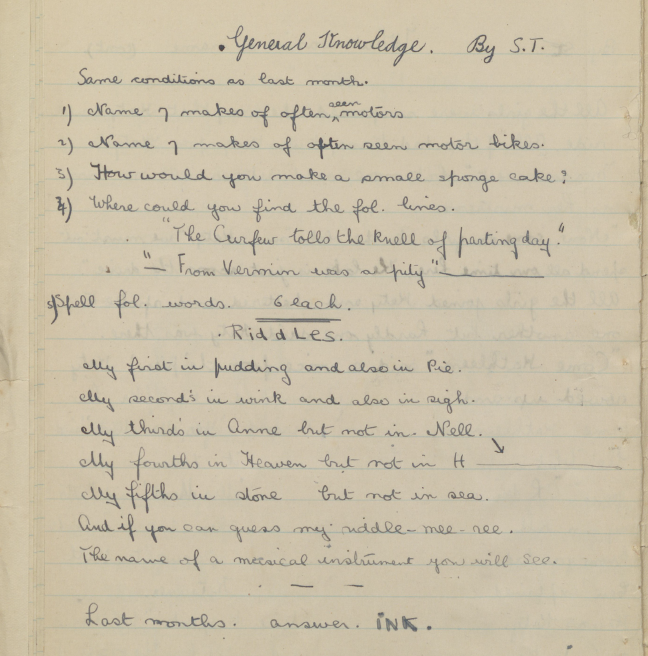
The questions of the General Knowledge quiz provide an interesting insight into life in the 1920s. It is expected that the readers will be able to identify 'seven makes of often seen motor bikes', know how to make a sponge cake, and can identify two lines of poetry.
And finally, this month's edition of The Two Pickles!
The July edition of The Club Monthly, where the summer holidays are in full swing.
The August edition of The Club Monthly, with lots of stories - just in time for a new school year.
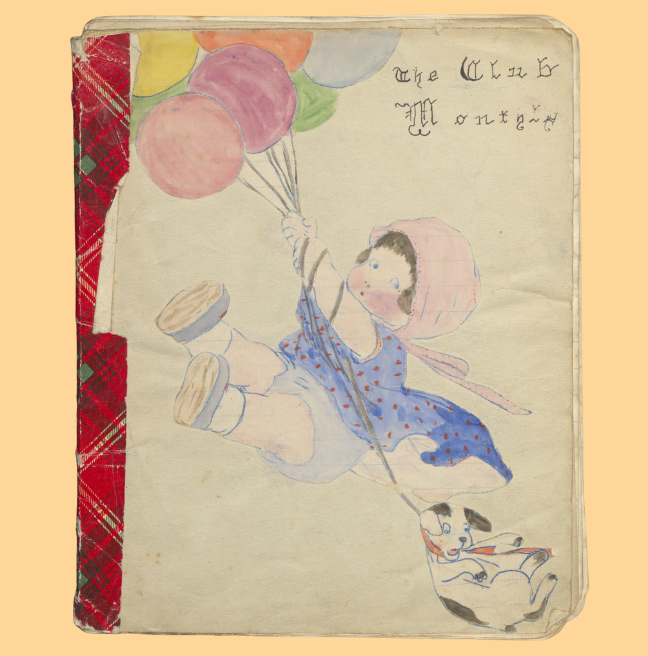
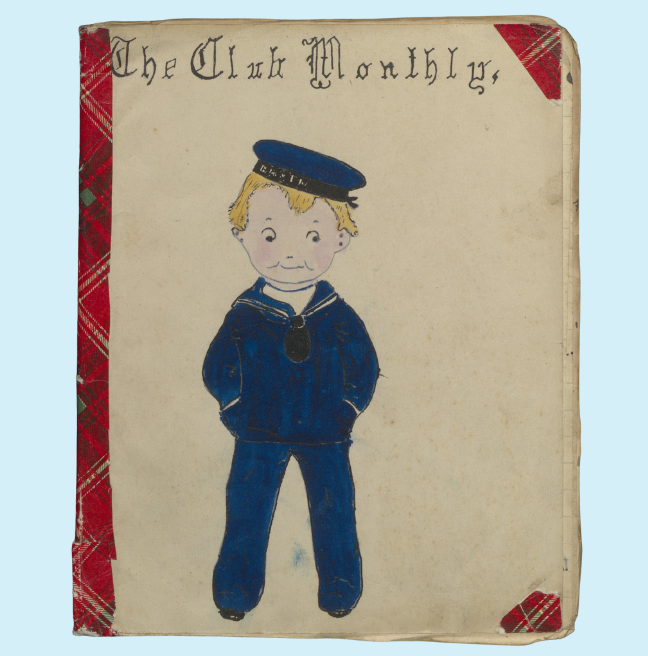
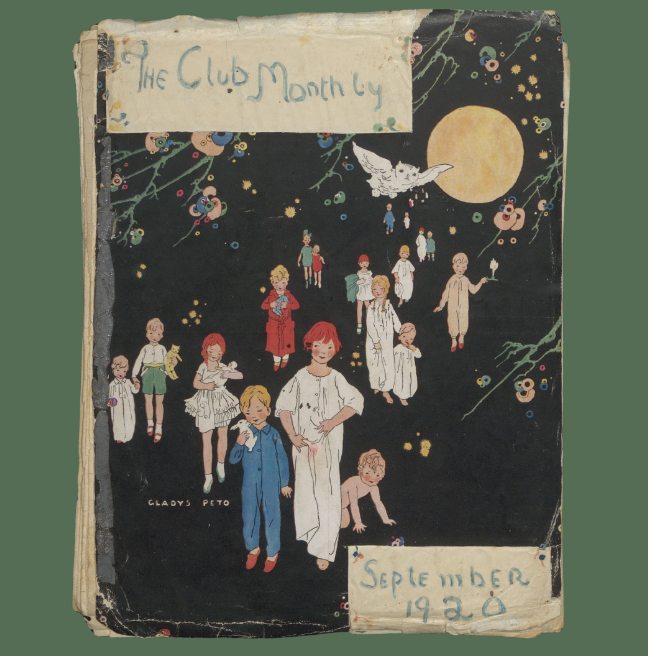
It's back to school for the authors of The Club Monthly, a handmade magazine made in 1920.